Together with Schreberjugend: from a Berlin exchange to a long-term partnership
Some partnerships are about money. Others are about ideas, people, and the slow work of changing how a space feels. Our partnership with Deutsche Schreberjugend belongs firmly to the second kind, and it’s one of the relationships we’re most proud of.
Schreberjugend is a German youth organisation with a long tradition in community gardening, sustainability education, and international youth work. They run regular exchanges with partners across Europe, Israel, and the broader region, and Albania is on their list of active partner countries. Their work sits at the intersection of urban sustainability, civic education, and youth empowerment, exactly the kind of cross-disciplinary mix that aligns with how N’Zon thinks about coworking. Our space is built on Bauhaus principles, a design philosophy that asks how everyday environments can serve people better. Schreberjugend’s work asks essentially the same question, just translated into the language of green spaces, urban biodiversity, and community-led ecology.
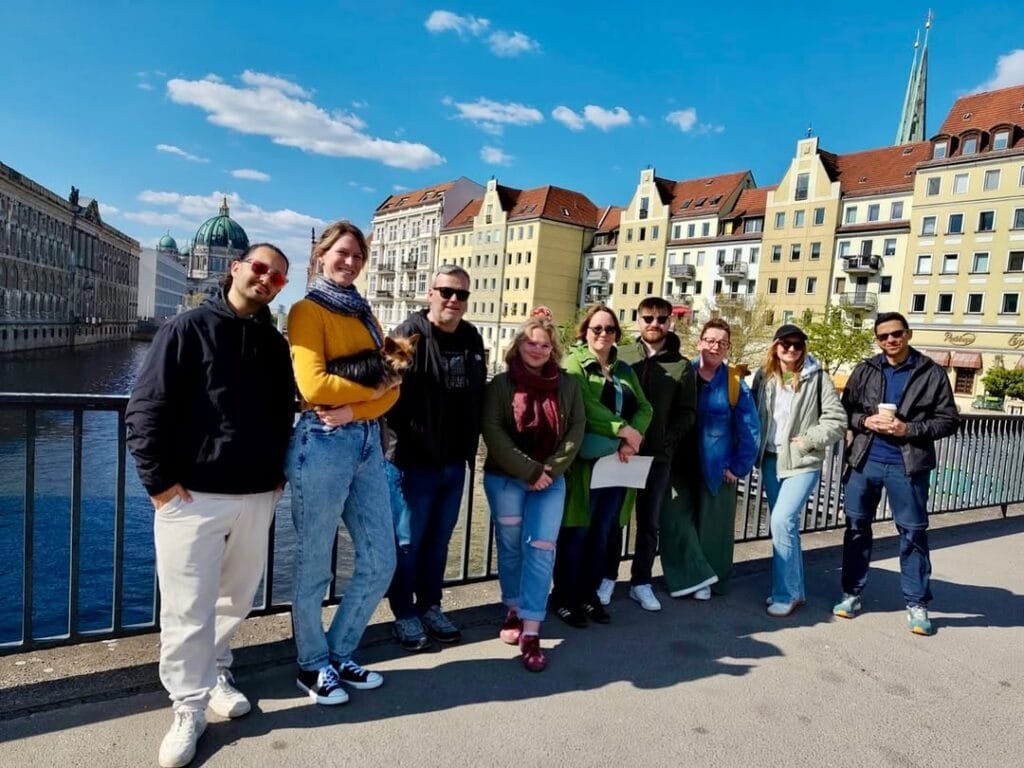
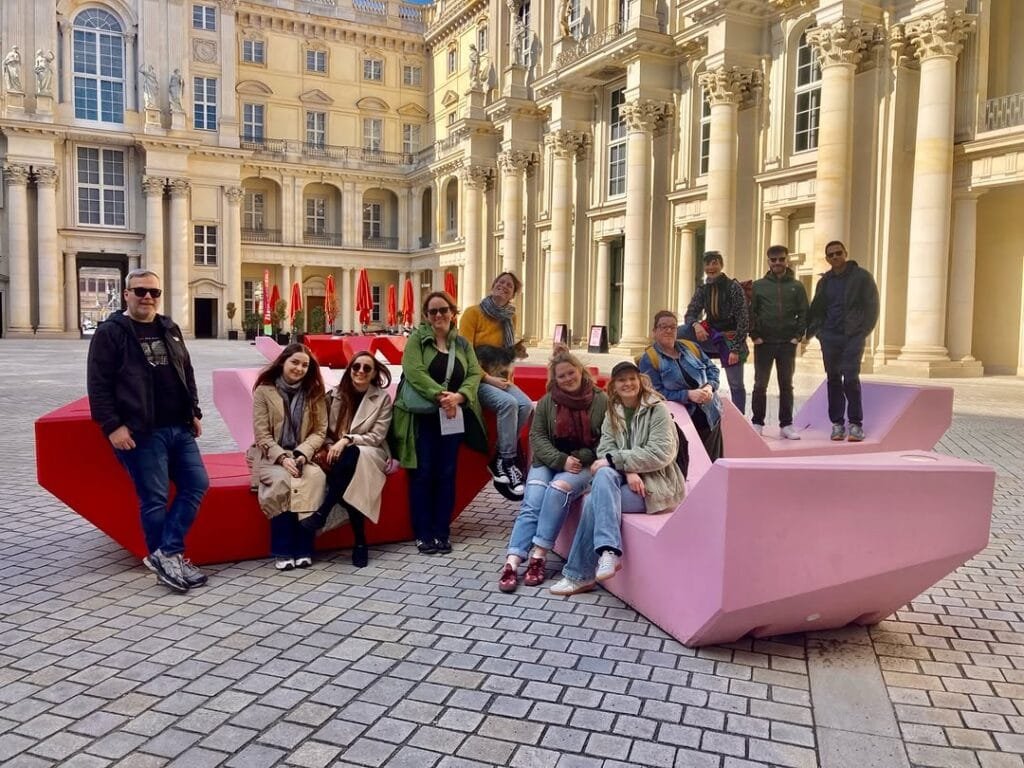
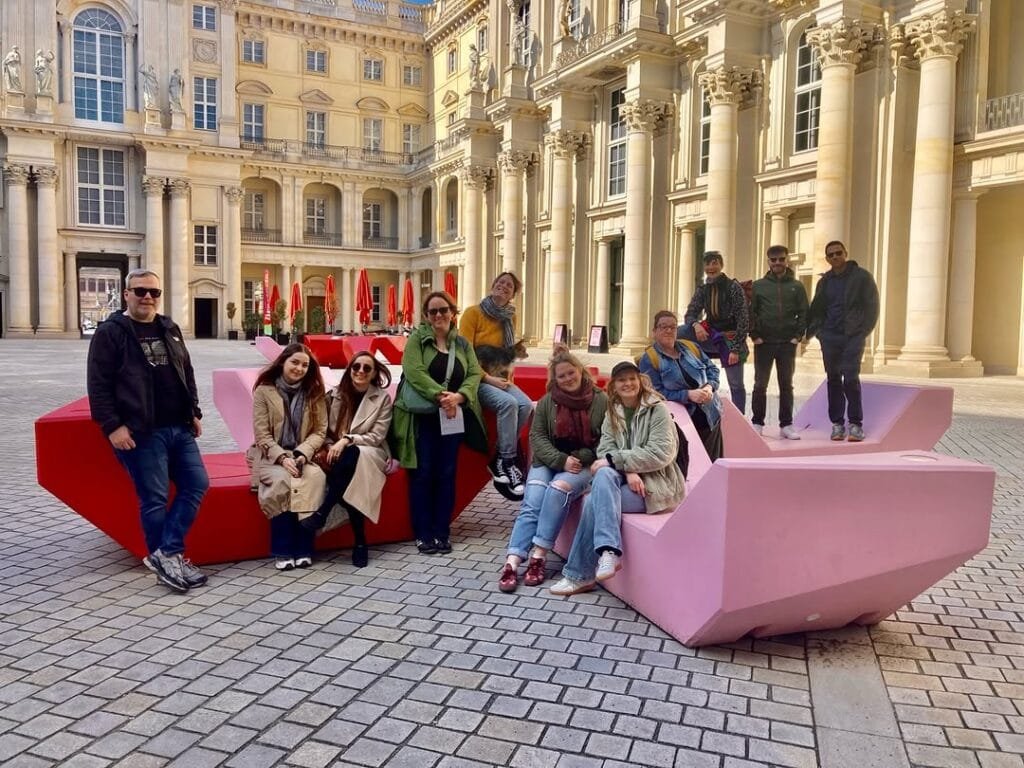
From the first conversation, the partnership felt natural. The first concrete chapter came in October 2025, when our team travelled to Berlin for a Professionals’ Exchange (ProfXChange) hosted by Schreberjugend. Four days of meetings, garden tours, workshops, and shared meals, designed to do what good exchanges do: replace polite introductions with actual working relationships.
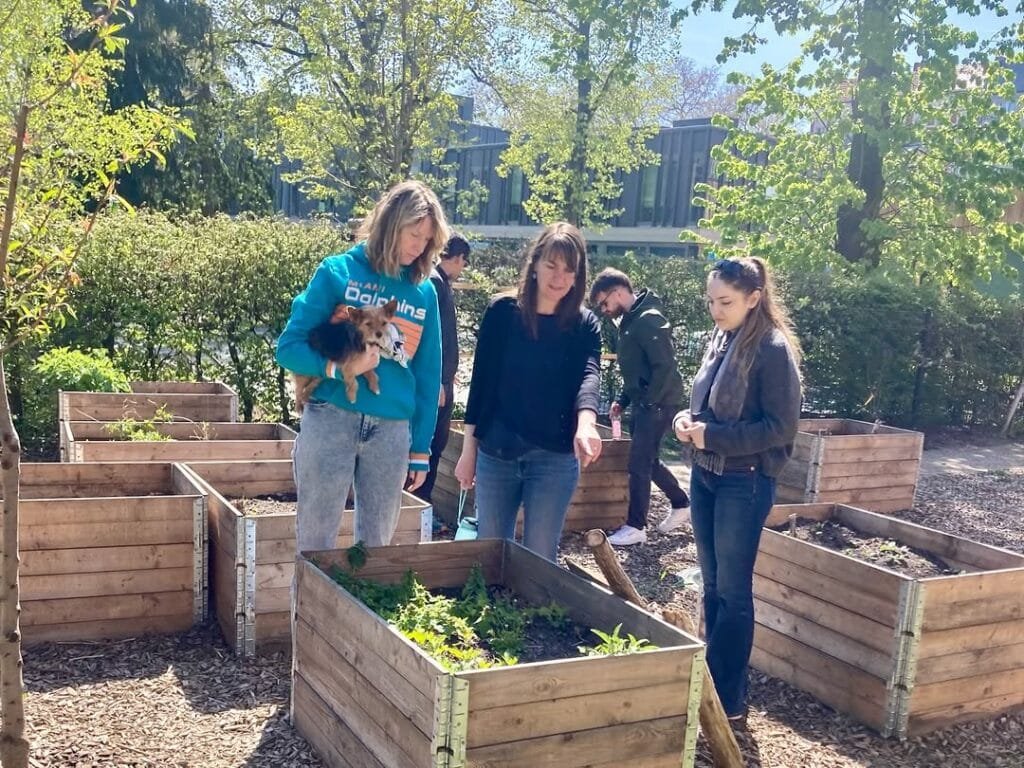
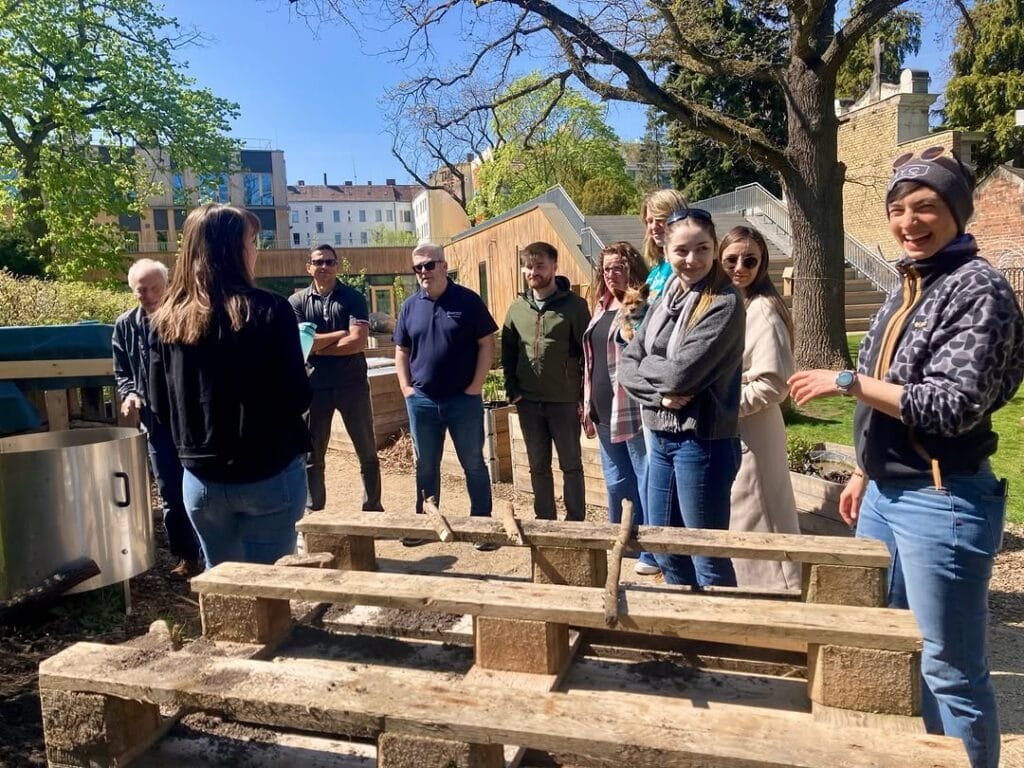
The visit was structured to mix theory and ground-level work. At the Schreberjugend headquarters in Hermannstraße, we were welcomed with a tour of the building and an exhibition called “Small Gardens, Large Impact,” which set the tone for what followed. We toured the Schreberjugend gardens and learned how their school garden project and “Mitmachgarten” (participatory garden) model actually works in practice. We met partners from Northern Ireland who joined the exchange and shared their own community work. We walked through Tempelhofer Feld, the former airport now reclaimed as one of Berlin’s most ambitious public green spaces, and visited Prinzessinnengarten, an urban gardening project where the team walked us through how they involve the local community in everything from planting to programming.
The hands-on parts of the exchange were the most useful. We spent a Saturday morning in workshops, building a raised bed and learning seed extraction, then moved on to a session on biochar, both as a soil fertiliser and as a small but real climate measure. Later that day we joined a “Familiennacht,” a neighbourhood community event with harvesting, cooking and eating together, the kind of thing that can’t be transplanted directly to Tirana but whose underlying logic absolutely can.
The closing session at Futurium, fittingly named “Let’s act,” was where the trip stopped being just a visit and started becoming a plan. We walked out with concrete ideas about how to embed green practices more deeply into N’Zon, how to develop our community garden concept, and how to use N’Zon as a model for what a small, sustainability-minded space can offer beyond its own walls, including in rural areas of Albania.
That’s what makes this partnership different from a simple knowledge exchange. Schreberjugend has never approached it as a senior organisation helping a junior one. From the start it has been a meeting of peers, different in size and history, but equal in commitment. The conversations are about cooperation and shared development, in both directions.
Our gratitude to Deutsche Schreberjugend, and to the people there who have made this partnership real, not on paper, but in the gardens we walked through, the workshops we ran together, and the dinners that ended late.