A Memorandum of Understanding with the Agricultural University of Tirana, and a first studio visit on 29 October 2025
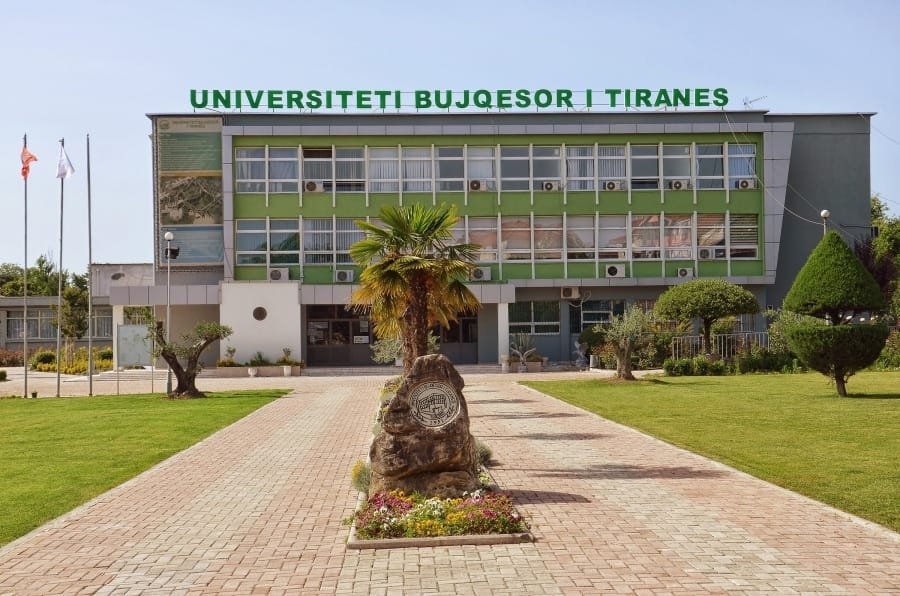
There’s a particular kind of partnership that doesn’t fit neatly into the categories of “funder” or “client” or “vendor.” It belongs to a quieter, more durable category: the institutional partner whose value is measured in shared knowledge and joint work. For N’Zon, the Agricultural University of Tirana, Universiteti Bujqësor i Tiranës (UBT), has become exactly that kind of partner.
Founded in 1951, UBT is Albania’s leading public university in agronomy, environmental science, forestry, horticulture, biotechnology, and related fields. It’s the obvious institutional partner for any organisation in Albania that takes sustainability and green design seriously, and it’s the kind of partner whose involvement signals that the work is real, not decorative.
The relationship between N’Zon and UBT is now formalised through a Memorandum of Understanding. The MoU establishes a framework for cooperation across areas of mutual interest: green practices, sustainable urban design, biodiversity, and the integration of academic research with applied, real-world environments. For an institution of UBT’s standing to enter such an agreement with a young coworking space says something about how seriously N’Zon’s environmental commitments are being taken outside our own walls.
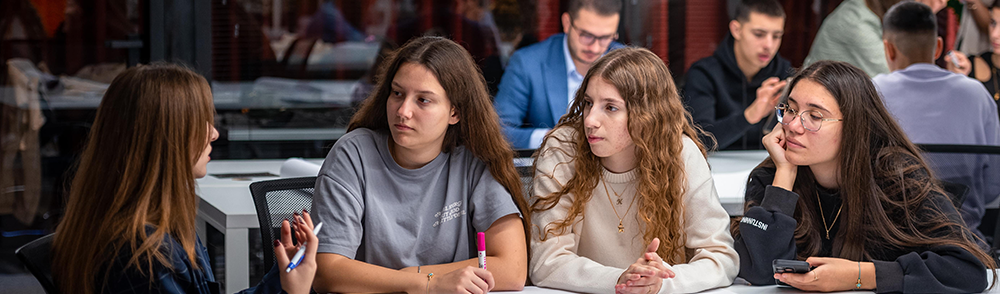
On 29 October 2025, the framework moved from paper into the space itself. Students from the Department of Horticulture and Landscape Architecture, in the framework of their Landscape Design Studio II course, visited N’Zon to present their site analysis. It was the first time the department brought students into our space, and it was also the first concrete step under the MoU.
The visit mattered for a few reasons. For the students, it was an opportunity to apply landscape architecture training to a working environment with real users, real constraints, and a brief that doesn’t come from a textbook. For us, it was a chance to see N’Zon through eyes that read the space differently, eyes trained to look for circulation, micro-climate, planting strategy, and the relationship between built and unbuilt areas. Site analyses are usually treated as a preparatory step in a design process. In this case, the analyses themselves were already a contribution: they helped us see things about our own space that we hadn’t fully articulated.
The educational dimension matters as much as the design one. Students worked on a real site, not a hypothetical case study, and presented their work in the place they were analysing. That kind of applied learning is exactly what the Bauhaus tradition we draw from would recognise as valuable: theory and practice integrated, with the environment itself becoming part of the lesson.
Looking ahead, the Memorandum of Understanding gives us a framework, and the studio visit gives us a starting point. The conversations underway with UBT are about turning this into something continuous: further studio engagements, research projects, student internships, and the possibility of using N’Zon as a long-term applied site for university work in sustainable urban environments. The first chapter has been written. The next ones are being planned.
Our thanks to the Department of Horticulture and Landscape Architecture at the Agricultural University of Tirana, to the professors who lead the Landscape Design Studio II course, and to the students who walked into N’Zon for the first time on 29 October 2025 and left it slightly different than they found it.